



 Donno Bikes
In recent years, we have witnessed a renewed passion for bicycles, no longer just as a hobby or sport, but as a real family mobility solution. This paradigm shift, fuelled by the desire for a more sustainable lifestyle and the need to navigate urban traffic more efficiently, has led to a significant increase in the use of bicycles in our cities. Families, in particular, have embraced this trend, discovering the bicycle as a practical and pleasant way to make daily journeys with their children.
However, as the bicycle establishes itself as a popular choice for family transport, a critical and too often overlooked problem emerges: improper use of child seats. Many parents, often without realising it, put their children's safety at risk by fitting type-approved child seats on roof racks that are not suitable for their weight. This practice, which is widespread due to a lack of information and awareness, ignores the maximum load limits of roof racks, usually between 5 and 7 kg, creating a dangerous situation for transporting children. In this article, we will explore the risks associated with this practice and discuss solutions to ensure that bicycle travel remains a safe and joyful experience for the whole family.
The Truth About Child Seats and Carriers
In the changing urban environment, where bicycles are increasingly being used as a means of family transport, two critical and distinct problems emerge concerning the transport of children. Parents, putting the safety of their children first, carefully select approved child seats to transport their children, but come up against two significant limitations.
Issue 1: The Limitation of Traditional Bicycles
Traditional bicycles are not conceived to carry heavy loads. This structural limitation has a direct impact on their stability and safety, especially when it comes to adding extra weight, such as a child. To ensure safe transport, a bicycle specifically designed for this purpose, such as a cargo bike, is required. These bikes are built with technical features that ensure stability and safety even with heavy loads, unlike classic bikes that cannot guarantee the same reliability in such situations.
Problem 2: The Inadequacy of Standard Carriers
Even more worrying is the structural fragility of luggage racks mounted on conventional bicycles. These racks, often made of thin, lightweight tubes, are designed to carry a load maximum 5-7 kga limitation that can easily be exceeded by a child of a few months. This limitation makes luggage racks extremely inadequate and incapable of safely carrying more weight, to the point where even a watermelon would be too much. Installing a child seat on these racks not only undermines the stability of the bicycle, but also increases the risk of the rack suddenly breaking, with potentially serious dangers for both the driver and the child.
Regulations and Approvals - What Parents Need to Know
In a context where road safety is increasingly paramount, it is essential for parents to be well informed about the current regulations on transporting children by bicycle. However, these regulations have significant gaps that can be misleading.
Overview of Current Regulations on Child Bicycle Seats
The Italian Highway Code, in Articles 68 paragraph 5 and 182 paragraph 5, specifies that bicycle seats must be type-approved and meet certain safety standards. Only one child up to 8 years of age may be transported, with weight limits for front and rear seats.
Gaps in Regulations
These regulations do not consider the overall safety of the transport system. In particular, they do not take into account that classic bicycles are not designed for loads exceeding the rider's weight, which is calculated at around 70 kg. Adding a child in the child seat can therefore greatly compromise the stability of the bicycle.
In addition, the Highway Code does not address the issue of the very limited load capacity of standard luggage carriers (5-7 kg). This is critical because child seats, which can carry up to 25 kg, are mounted on unsuitable luggage racks. This inconsistency creates a risky situation where the base of the seat (the luggage carrier) is not strong enough for the load that the seat is designed to carry, making the whole transport system extremely dangerous.
The Urban Revolution: From the Ancient Bicycle to Today's Cargo Bikes
The Modern Era Requires Change
The classic bicycle, once a pillar of simplicity and efficiency, now encounters its limits in contemporary cities. Originally designed for slimmer people, it no longer reflects the needs of a society with a higher average weight and stature. The increasingly crowded urban streets demand more robust, versatile and safe means of transport.
Cargo Bikes: An Innovative Solution
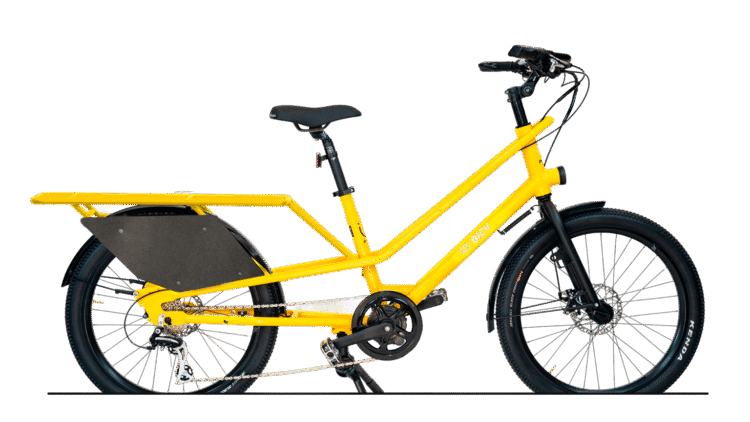
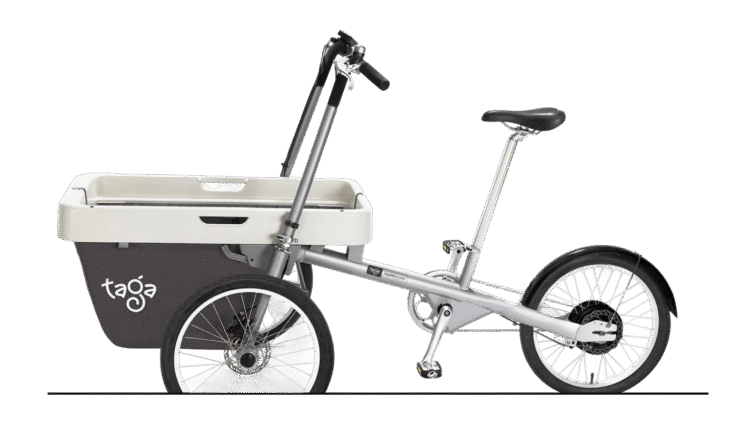
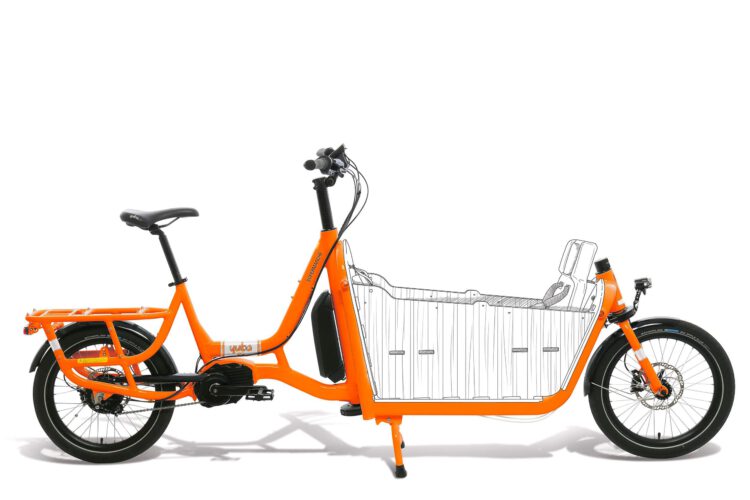
In this context, cargo bikes emerge as modern heroes of urban mobility. Redesigned for safety and stability, these bikes can handle heavier loads without compromising agility. With their innovative design, they offer a practical and environmentally friendly solution, ideal for urban families.
A New Era for Families
Cargo bikes are not just a means of transport, they symbolise a revolution in city living. They offer families the freedom to move around safely and comfortably, carrying children, shopping and more. This is not just a change in mobility; it is a new chapter in urban history.
A Response to Problems Raised
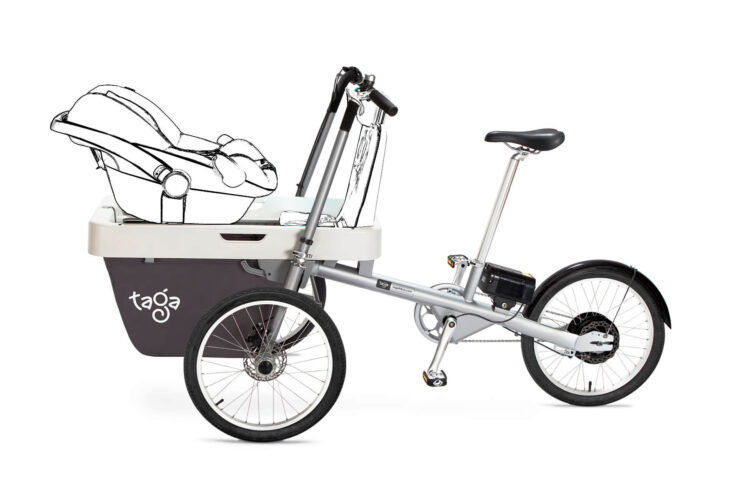
After analysing the problems of homologated child seats on unsuitable bikes and fragile luggage carriers, cargo bikes prove to be the perfect answer. Designed for safety, they can comfortably accommodate homologated child seats without risk, thanks to a reinforced structure suitable for higher loads. Cargo bikes are the ideal solution for safe and sustainable urban mobility, especially for families looking for reliable alternatives to classic bicycles.
Integrating Cargo Bikes into Modern Urban Mobility - A New Era for Families
The Limitation of Traditional Bicycles
Classic bicycles, optimised for a cyclist weighing around 70 kg, are no longer sufficient to meet the needs of modern families. Designed in a different era, these bicycles do not take into account the average increase in height and weight of today's population, nor the changes in safety standards. A classic walking bicycle, for example, measures about 165-170 cm in length.
The Solution: New Generation Cargo Bike
In this context, cargo bikes prove to be an ideal solution. With a completely redesigned and reinforced structure, these bikes are capable of carrying significantly heavier loads. The typical length of a cargo bike, which is slightly longer than that of a conventional bicycle, offers stability and space to safely transport children and goods.
Government and Community Incentives
The Italian and European governments, recognising the benefits of cargo bikes for urban mobility and health, have promoted the use of these bikes with various incentives since 2020. These programmes make cargo bikes an affordable and desirable choice for urban households.
Cargo Bike: A New Lifestyle
Cargo bikes offer an efficient, safe, healthy and fun way of getting around. They are perfect for families seeking to reduce their dependence on cars, while offering a practical means of transport for everyday life. This transition is not only a change in the way of getting around, but represents a new chapter in the history of urban mobility, where sustainability, safety and practicality come together.
The Role of Parents in Promoting Safety
Initial Investment and Long-Term Savings
While the price of a quality electric cargo bike can hover around EUR 3,500-4,500, it is essential to consider this as a long-term investment. Considering the running costs of a car, including fuel, maintenance, insurance and parking, it is possible to save this amount in just one year. In addition, many cargo bikes can be purchased in instalments, with plans starting at around 100 euro per month, making this investment affordable without putting too much strain on the family budget.
Safety and Sustainability: Parents' Priorities
Investing in a cargo bike is not only an environmentally friendly choice, but also a fundamental step towards child safety. By offering a safe solution for transporting more children or older children, cargo bikes eliminate many of the risks associated with classic bicycles. Parents can thus become positive role models, promoting road safety and a sustainable lifestyle.
Practical Road Safety Education
By using cargo bikes, parents have the unique opportunity to teach their children the importance of road safety and respect for the environment. This practical experience is invaluable and contributes to forming responsible and aware citizens.
The Importance of Bicycle Safety for Children
This article explored in depth the issue of child safety in the context of urban mobility. We have seen how classic bicycles, despite having been a popular choice for decades, are no longer suited to the needs of modern families, especially when it comes to transporting children.
A Call to Action for Parents
It is crucial that parents become more aware of the safe transport options available. Choosing a cargo bike is not only an environmentally friendly choice, but an important step towards safe cycling for children. These new generation bikes offer stability, space and safety, eliminating many of the risks associated with classic bicycles.
A Step Towards a Safer and More Sustainable Future
We conclude this article with an invitation to consider cargo bikes as a practical and safe solution for transporting children in the city. These bikes represent not only a means of transport, but a real change in the way we live and move in our urban communities.
Together, we can work towards a future where urban mobility is safer, more sustainable and better suited to the needs of modern families. If you have questions or would like more information about cargo bikes and how they can enrich your lifestyle, please contact us via WhatsApp Business. Our team is ready to provide you with all the information you need to help you make an informed choice for your family.
Contact us on WhatsApp at +393757783677
Find your bike
IDEAL now!
A free consultation!