




 Donno Bikes
 Two-wheel vs three-wheel cargo bikes: what’s the difference?
To begin with, an electric cargo bike—whether two- or three-wheeled—is the missing link between a regular bicycle and a car. So all those excuses you used to rely on for choosing the car over the bike no longer apply when it comes to a cargo bike:
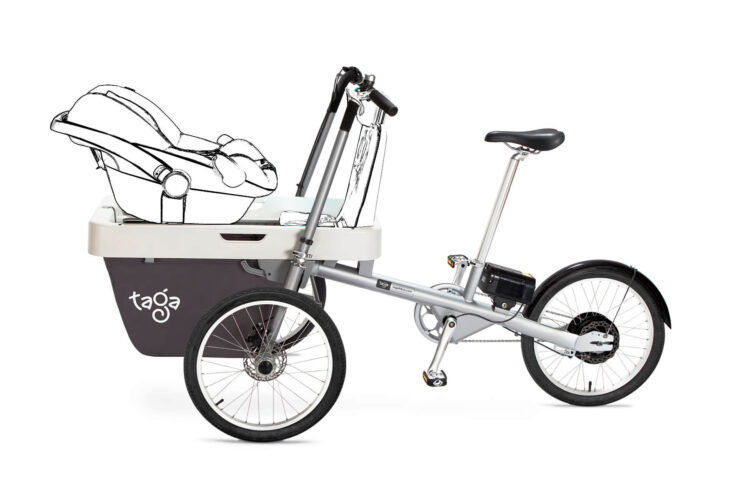
It’s spacious enough to carry virtually any load—including your most precious cargo: your children (even from birth).
Thanks to its motor, it’s fast (up to 25 km/h—the legal maximum). You can adjust the assistance level, so you’ll arrive at the office fresh and sweat-free—even in summer.
It’s inherently stable (in the three-wheeled version) or exceptionally well-balanced (in the two-wheeled version)—far more so than a standard bicycle fitted with a child seat (let alone two, which is actually illegal under road traffic regulations) or any other additional load you might want to carry.
Now let’s explore the key differences—and advantages—between two- and three-wheeled cargo bikes.
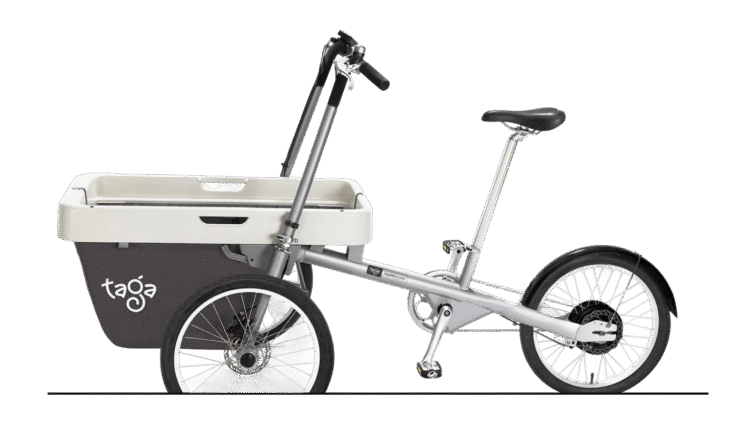
Let’s start with three wheels. These can be configured with two wheels at the front and one at the rear—or vice versa: two wheels at the rear and one at the front, following the same principle as a child’s tricycle. Though it may look somewhat unrefined, this layout remains fairly popular among older riders.
Yet it’s not quite as convenient as it first appears. Beyond aesthetics, the wider rear section—combined with reduced control (since it’s behind you)—means there’s a real risk that the rear wheels won’t clear the same path already taken by the front half of the bike.
The situation changes completely with two wheels at the front. This configuration gives you full control over the bike —and once the front wheels pass through, you don’t need to worry about the rear ones.
The cargo bike no longer resembles a child’s tricycle, and modern designs make it genuinely cool.
When carrying children, they sit up front—giving you full visibility and awareness of what’s happening around them. This position also lets you talk to them and share the journey together.
Another advantage of a three-wheeled cargo bike—with two wheels at the front—is its exceptional stability. Depending on whether it leans into corners (tilting) or stays upright, these cargo bikes vary in stability. Let me clarify: regardless of everything else, a three-wheel structure is inherently more stable than a two-wheel one. That said, non-tilting cargo bikes stand fully upright at 100%—so they require zero balancing effort from the rider. In this case, you’ll need to slow down slightly before entering a corner and take it at a more moderate pace than usual.
For beginners, choosing your first electric cargo bike is simpler with the help of a consultant.
If you’re taking the corner at higher speed, you may instinctively compensate by leaning slightly in the opposite direction—a natural, intuitive movement.
With a tilting cargo bike, you can take corners at full speed—just like on a conventional two-wheeler—leaning into the turn. This makes the bike faster, but less stable overall. So despite having three wheels, this type still requires active balancing from the rider.
It also takes a little practice to get used to riding—since it’s different both from the two-wheeled bikes we’re familiar with, and from non-tilting three-wheelers, which demand no special skills.
Another advantage of three-wheeled bikes is their greater capacity for bulky loads —typically larger than that of two-wheeled cargo bikes.
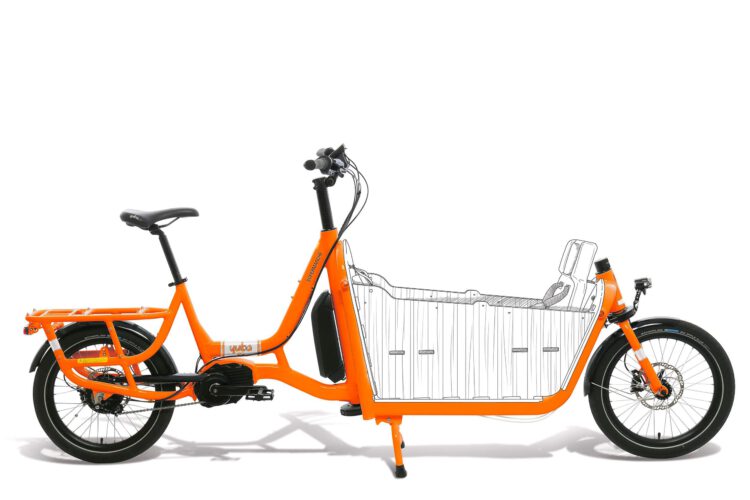
However, there’s a type of two-wheeled cargo bike, whose load capacity rivals that of three-wheelers: the front-loading cargo bike.
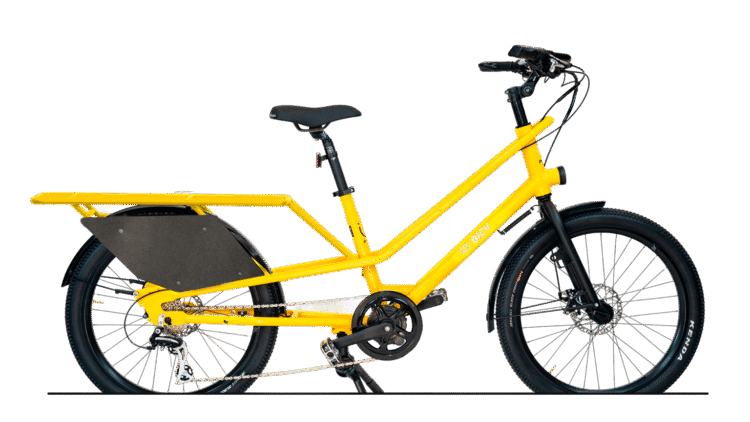
Let’s look at further benefits of two-wheeled cargo bikes—or, as they’re often called, family bikes. First and foremost: manoeuvrability. These bikes are generally slimmer and more agile than their three-wheeled counterparts.
They’re typically faster to accelerate, even though the legal speed limit remains 25 km/h.
They’re better suited to narrow streets, and historic city centres, navigating comfortably through traffic e cobblestone pavements.
As a two-wheeled cargo bike, it has the look e the riding feel most familiar.
I hope this has helped clarify the key differences between two- and three-wheel family (cargo) bikes. If you have any further questions, feel free to reach out via WhatsApp at 3281183008—we’d be delighted to provide more details or answers. Send us your questions and share your experiences; we’ll include them in our next article.
Find your bike
IDEAL now!
A free consultation!


